

St Mary Aldermary
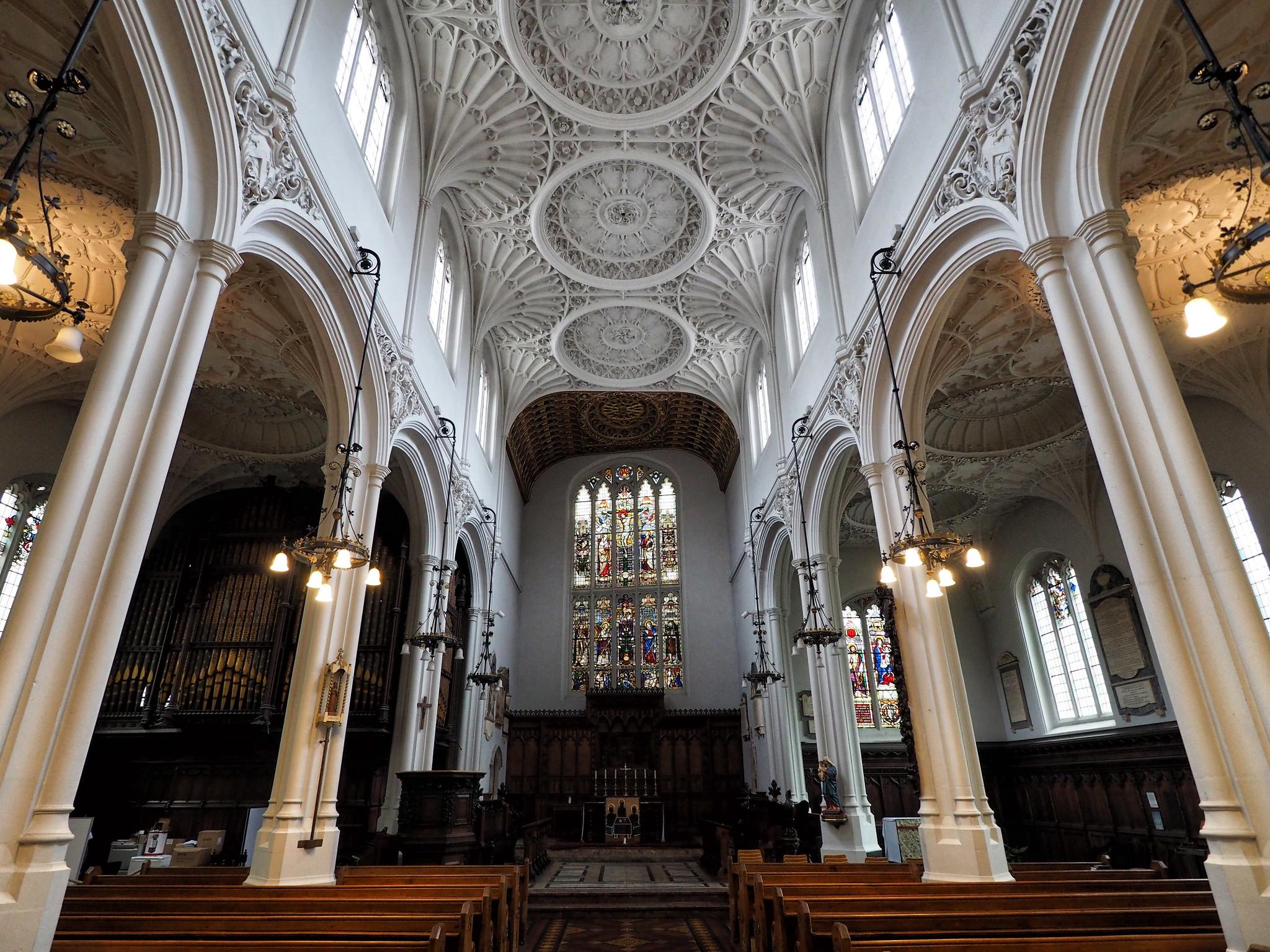
St Mary Aldermary is a late medieval parish church in the heart of the City of London, standing on Bow Lane where it meets historic Watling Street. Now an Anglican church, it serves as both a place of worship and a quiet refuge amid the financial district, its present structure reflecting a long history of rebuilding and adaptation. Of medieval origin, the church was substantially rebuilt from 1510 and only completed in 1632, before being badly damaged in the Great Fire of 1666 and then reconstructed under the direction of Christopher Wren’s office in a rare late Gothic style.
St Mary Aldermary is thought to be the oldest church in the City of London dedicated to the Virgin Mary, with documentary references dating back to around 1080. The current building, completed after Wren’s post-fire reconstruction, is famous for its soaring plaster fan-vaulted ceiling and its status as one of the most important late 17th‑century Gothic churches in England. Today it functions as a Guild Church and community hub, combining historic fabric with an active contemporary ministry and café in the nave
Located on Bow Lane at the junction with Watling Street
-
Older St MaryThe “Aldermary” name likely means “older St Mary,” distinguishing it from newer Marian churches in the City and hinting at its particularly ancient origins
-
WrenWren’s team rebuilt it in Gothic rather than classical style, apparently because a benefactor’s legacy required the new church to imitate the pre‑fire building, making it the only Wren church in the City fully executed in late Gothic
-
Unique plasteringThe spectacular plaster fan vaulting in the nave and aisles contains coats of arms, including that of Henry Rogers, the wealthy merchant whose bequest funded much of the rebuilding.
-
Ceremonial swordInside is a rare 17th‑century wooden sword rest (used to hold the ceremonial sword of the Lord Mayor), dating from around 1682 and considered an unusual survival.
-
Stained-glassThe stained-glass scheme is largely post‑Second World War, including windows that depict both the Great Fire of London and the defence of London in 1939–45, blending the church’s religious story with episodes from the city’s civic history.